Writing "proficient in AI" on your resume does nothing now. Every applicant writes some version of it, no hiring manager can verify it, and the line has quietly become background noise. If you genuinely work well with AI, the challenge is no longer saying so. It is proving it.
Proof means evidence of how you actually work with AI on real tasks, not a claim and not a course badge. Here is why the usual signals have stopped working and what you can show instead.
Why a resume line gets ignored
A resume claim is unverifiable by design, and employers have learned that the loudest claim and the real skill often do not match. The people who most confidently list "AI expert" are sometimes the ones who accept a wrong answer without checking it. Hiring managers know this, so they have started discounting the claim entirely and looking for something they can actually inspect.
What real proof looks like
Strong proof is concrete. It is a task you completed with an AI assistant where you can show the parts that matter: how you directed the model, the point where you caught it being confidently wrong, the check you ran before you trusted a number, and how the final result beat the first draft. That story, backed by evidence, says more than any adjective.
The strongest version of this is a verifiable credential, because it is scored on a standard task and the employer does not have to take your word for it. It turns "trust me" into "here is the evidence."
Do AI course certificates help?
They help a little. A course certificate shows you learned the concepts, which is real but limited: it is knowledge, not applied skill. It cannot show how you behave when the model gives you a plausible but wrong answer under time pressure. That behavior is what employers are actually trying to predict, and it is exactly what a course cannot certify.
How to get a credential that proves it
Complete a task-based assessment that watches how you work and issues a credential you can share. Answerr produces an AIQ credential from a one-hour session, scored across five dimensions and tied to what you actually did, so an employer can see the evidence rather than guess. If you want to understand what is being scored before you start, how AI capability is measured walks through it.
What to put on your resume and LinkedIn instead
Replace the adjective with something a reader can check. Three things work, in this order of strength:
- A credential line with a link. One line under Certifications that names the credential, the date and a URL the employer can open, for example an AIQ credential with its verification link.
- One evidence bullet per role. Describe a task, what you asked the AI to do, what you corrected, and the measurable result. "Used AI to draft the quarterly churn analysis, caught a double-counted cohort in its output, and cut turnaround from three days to one" beats "leveraged AI tools".
- A named workflow. If you have a repeatable way of working with AI (how you brief it, how you verify it), name it in one line. It signals a habit, not a one-off.
For wording and layout, see how to prove your AI skills on a resume.
How to talk about AI capability in an interview
Interviewers are listening for judgment, not tool names. A four-part answer covers it in about ninety seconds:
- The task: what you had to produce and why it mattered.
- The direction: how you framed the problem for the AI and what you asked for first.
- The catch: the moment the output was wrong, thin or overconfident, and how you noticed.
- The result: what you changed and how the final version was better than the first draft.
The third part is the one most candidates skip, and it is the one that separates people who work well with AI from people who paste its answers. If you cannot name a time the model was wrong, the interviewer will assume you did not check.
A quick self-check before you claim it
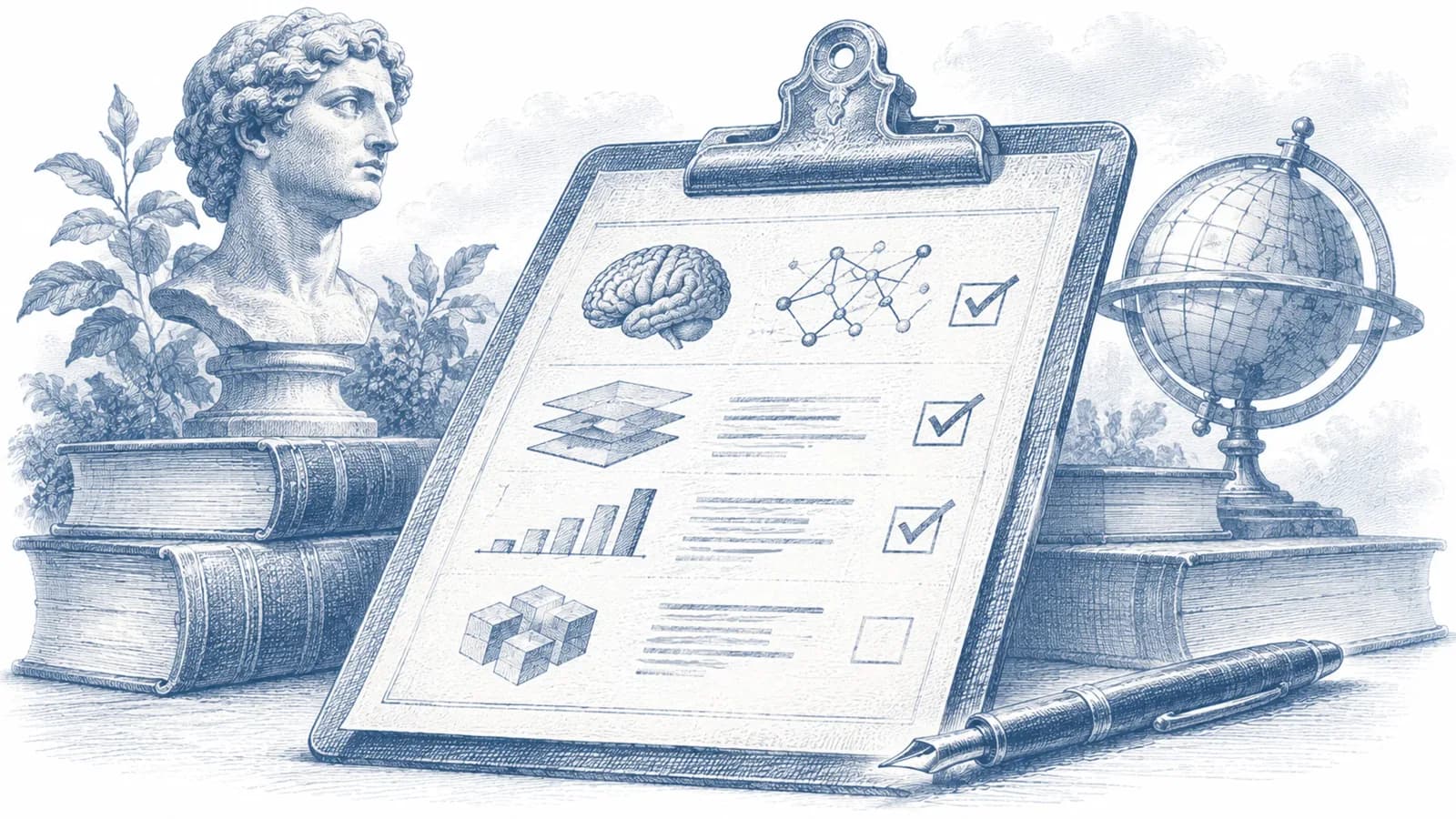
AIQ scores five dimensions, and they make a useful honest checklist. For your last real AI-assisted task, ask whether you can point to evidence of each. The AI capability glossary defines them in full.
- Judgment: did you decide when to trust, challenge or override the output?
- Questioning: did your prompts and follow-ups move the work forward?
- Critical thinking: did you verify a claim or number before using it?
- Reasoning: did you break the problem down rather than ask for one big answer?
- Adaptability: did your approach improve during the session?
If two or more are blank, that is the gap to close before the interview, and a task-based AI skills assessment will show you where you stand. For the scoring itself, read what AIQ is and how it is measured.
The job market is moving from claims to evidence faster than most resumes have caught up with. The candidates who can show how they work with AI, not just say they can, are the ones who will stand out.
Frequently asked questions
How do you prove AI skills on a resume?
You cannot prove them with a line that says "proficient in AI", because everyone writes it and nobody can verify it. The way to prove AI capability is with evidence of how you work with AI on a real task, ideally a verifiable credential an employer can check, plus a concrete example you can talk through in an interview.
What counts as proof of AI capability?
Evidence from real work: a task you completed with AI where you can show how you directed it, caught its mistakes, and improved the result. A verifiable credential that scores this from an observed session is the strongest form, because it is comparable and the employer did not have to take your word for it.
Do AI certificates from courses prove capability?
Course certificates prove you completed a course, which is about knowledge, not applied skill. They are worth something, but they do not show how you behave on a real task. Employers increasingly want the second thing, because that is what predicts on-the-job results.
How can a candidate get an AI capability credential?
Complete a task-based assessment that scores how you work with AI and issues a verifiable credential. Answerr produces an AIQ credential from a one-hour session that you can share with employers as evidence of how you actually work, not just what you claim.
How should I describe AI skills in a job interview?
Describe one real task in four parts: what you had to produce, how you directed the AI, the moment its output was wrong and how you caught it, and how the final result improved on the first draft. The part about catching an error is what shows judgment.